Why a Tailored Design Can Save Your Farm Hundreds of Millions of Dong
When starting farm construction, many investors focus primarily on initial equipment, capital expenditure, or construction schedules. In reality, however, the largest expenses often stem from fixing mistakes after the project has been completed.
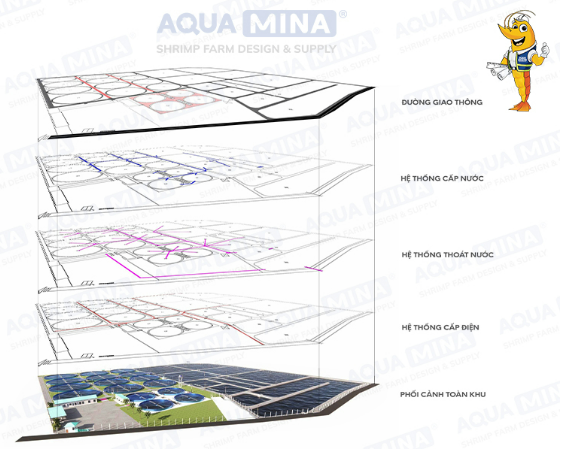
A suitable design provides investors with a clear roadmap on what to do, how to execute it, and where to allocate capital efficiently. As a result, unexpected construction costs are minimized, operations become smoother, and expensive future modifications are avoided.
Farm Design Means Designing an Entire Integrated System
An efficiently operated farm is not made of isolated ponds, but rather a network of synchronized operating systems. Every component must be calculated from day one to ensure stable operations today while keeping the farm ready for future expansion.
This is why farm design goes far beyond merely laying out pond positions. A properly executed design must anticipate how the entire farm will function over many years to come.
Right from the planning stage, key questions must be answered:
Does the water supply and drainage system meet actual operational demands?
Are internal access roads optimized for the efficient transport of feed, materials, and harvested stock?
Is the electrical infrastructure sufficient for current loads and flexible for future expansion?
Does the operational workflow effectively reduce labor, time, and overhead costs?
If these factors are overlooked initially, the unexpected costs incurred during daily operations will far exceed the investment in a proper design from the start.
Three Real-World Examples
Example 1: Inappropriate Piping Leads to Operational Inefficiency
In water-exchange farming models, the supply and drainage networks must be precisely engineered during the design phase. Even a slight error in pipe sizing can negatively impact the entire farm's operation.
For instance, to exchange roughly 50% of the pond water within 2 to 3 hours, the discharge pipe diameter must be calculated based on pond volume and flow rates. If smaller or off-the-shelf pipes are selected to cut initial costs, draining may take 5 to 6 hours instead.
This delay not only slows down production cycles and keeps workers waiting, but it also inflates operational costs over many years of use.
Example 2: Internal Road Layouts Directly Impact Labor Costs
Internal roadways are often underestimated, yet they directly dictate operational efficiency. Without proper planning to accommodate motorized carts, wheelbarrows, or hand trolleys, transporting feed, supplies, and harvested crops can demand significantly more labor and time.
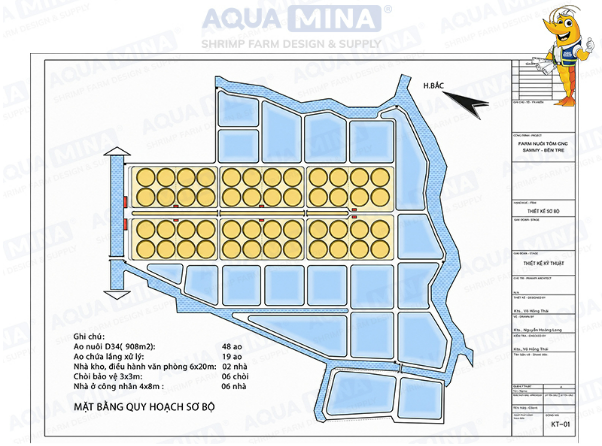
Therefore, even a subtle optimization in internal logistics planning can dramatically reduce long-term labor time and operational expenses.
Example 3: Power Deficits Limit Farm Scalability
Electrical infrastructure must be calculated right from the design stage. A farm might require a 200 kVA transformer station to run at full capacity, but if only 100 kVA is installed or under-spec wiring is used, the system will be unable to operate efficiently despite having the physical footprint ready. When expansion becomes necessary, upgrading the power grid later is far more costly than sizing it correctly from day one.
Every Farm Requires a Tailored Solution
No two farms are exactly alike.
Each plot of land features distinct topography, water sources, farming models, and capital capacities. Consequently, there is no one-size-fits-all blueprint.
What farmers need is not just a visually appealing drawing, but a tailored solution aligned with their actual site conditions and growth objectives.
Design Costs Are Always Lower Than the Cost of Correcting Errors
A well-suited design delivers clear value:
Minimizes unexpected expenses during construction.
Provides accurate cost estimates for better financial planning.
Optimizes daily operations and cuts labor costs.
Facilitates seamless expansion when needed.
Prevents costly future renovations.
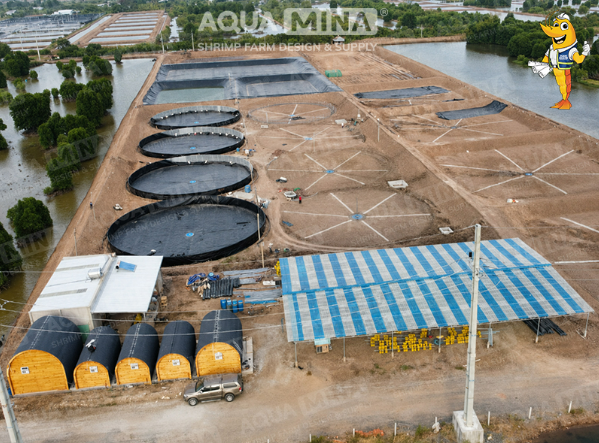
While these benefits may not be obvious on day one of construction, they become undeniably clear throughout the operational lifecycle of the farm.
At AQUA MINA, every project begins with surveying field conditions, listening to client needs, and analyzing unique operational challenges before proposing a solution.
We believe that a great design does not just build a farm—it builds a solid foundation for long-term operational efficiency, stability, and sustainable growth.
This embodies our core philosophy: “Design Driven by Understanding”—a principle AQUA MINA brings to every project we undertake.
AQUA MINA CO., LTD
– Address: 685 Le Duc Anh Street, Quarter 39, Binh Hung Hoa Ward, Ho Chi Minh City
– Phone: 1800 6071 (Toll-free hotline)
– Email: sales@aquamina.com.vn or oversea@aquamina.com.vn
– Aqua Mina’s Official Distributor in Japan: REX INDUSTRIES CO., LTD
– Address: 1-9-3 Hishiya-Higashi, Higashi-Osaka 578-0948, JAPAN
– Email: kimakubo@rexind.co.jp
– Phone: +81-(0)72-961-9893
– Website: www.rexind.co.jp/e/
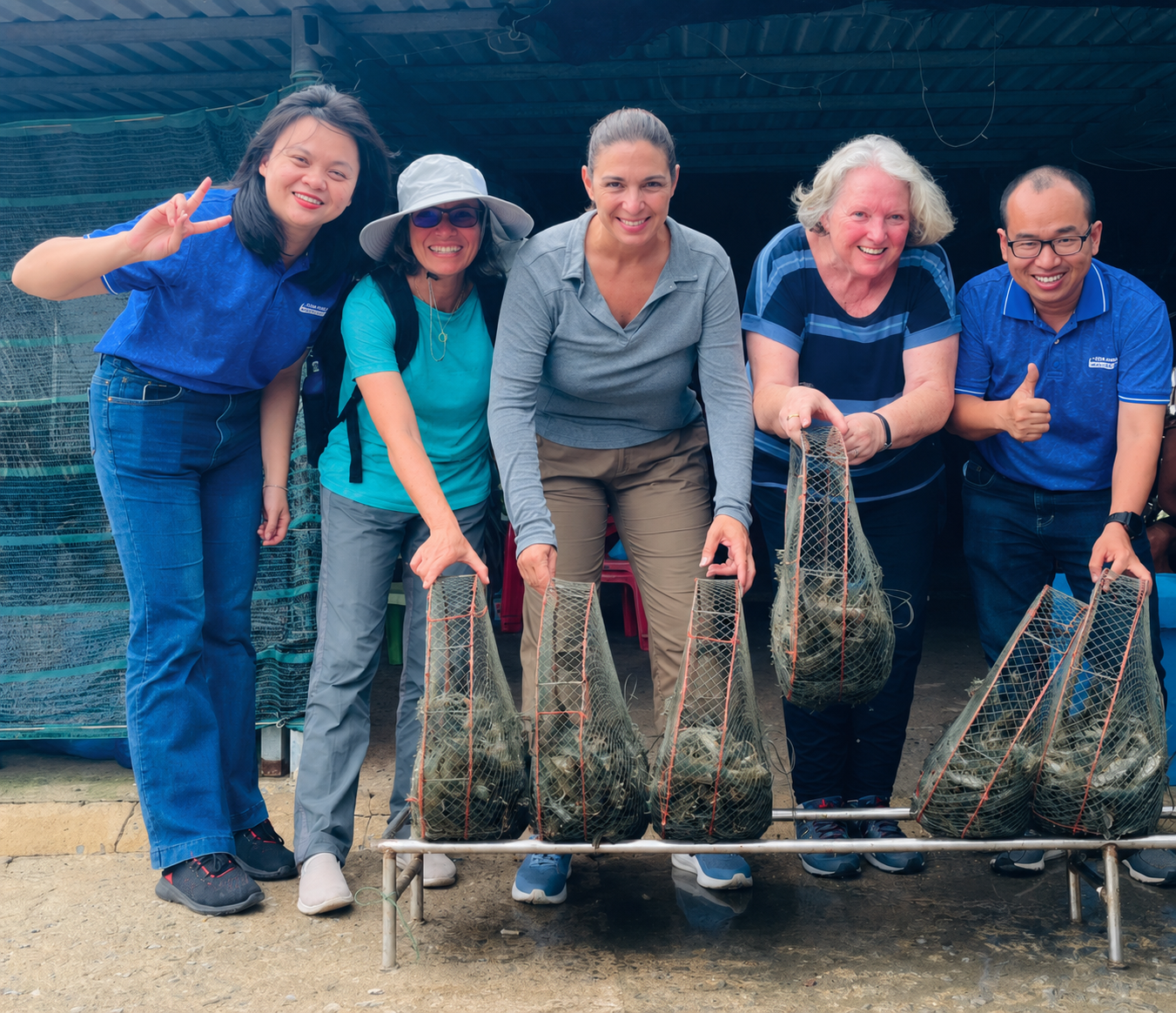
WE WORK FOR THE SUCCESS